Product Overview
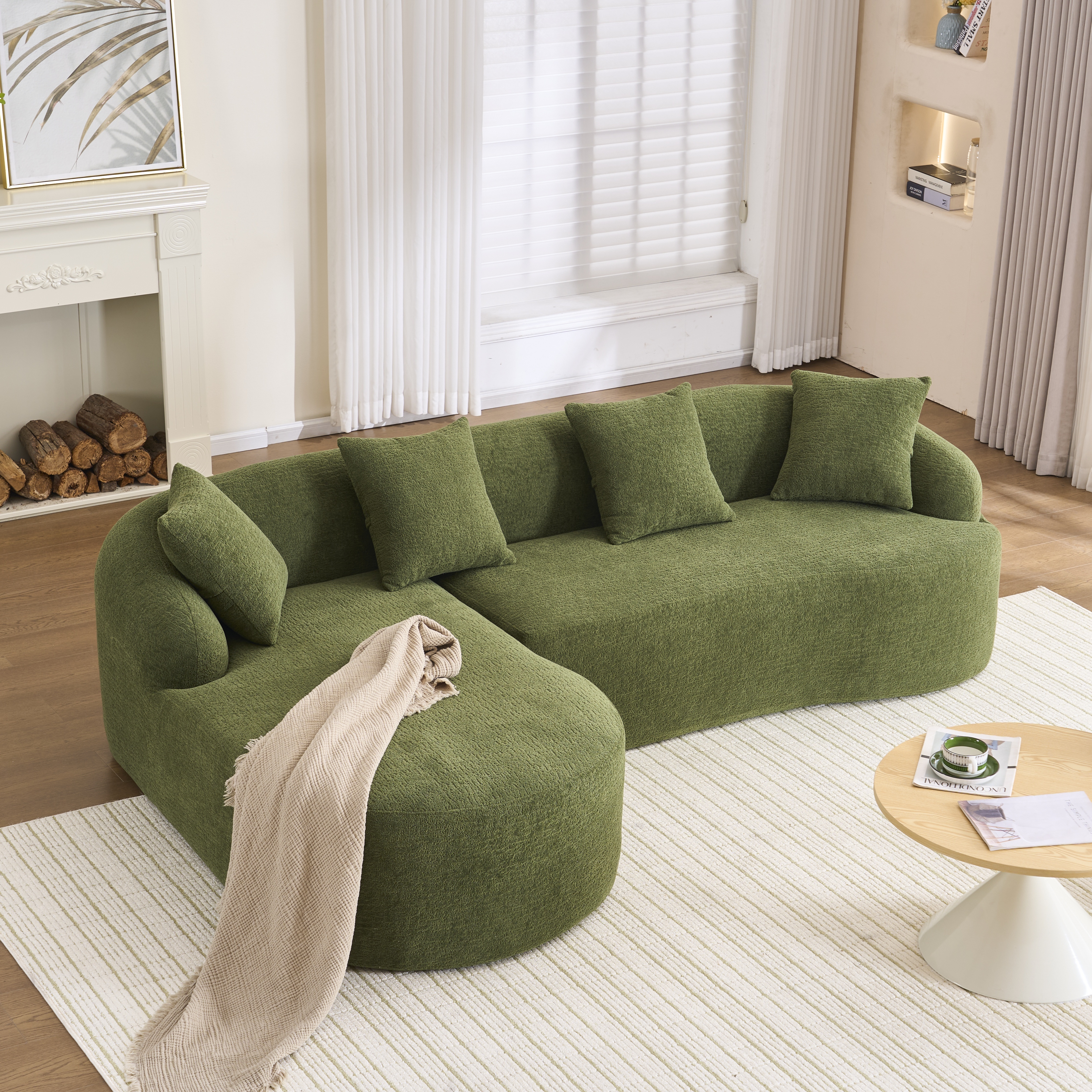
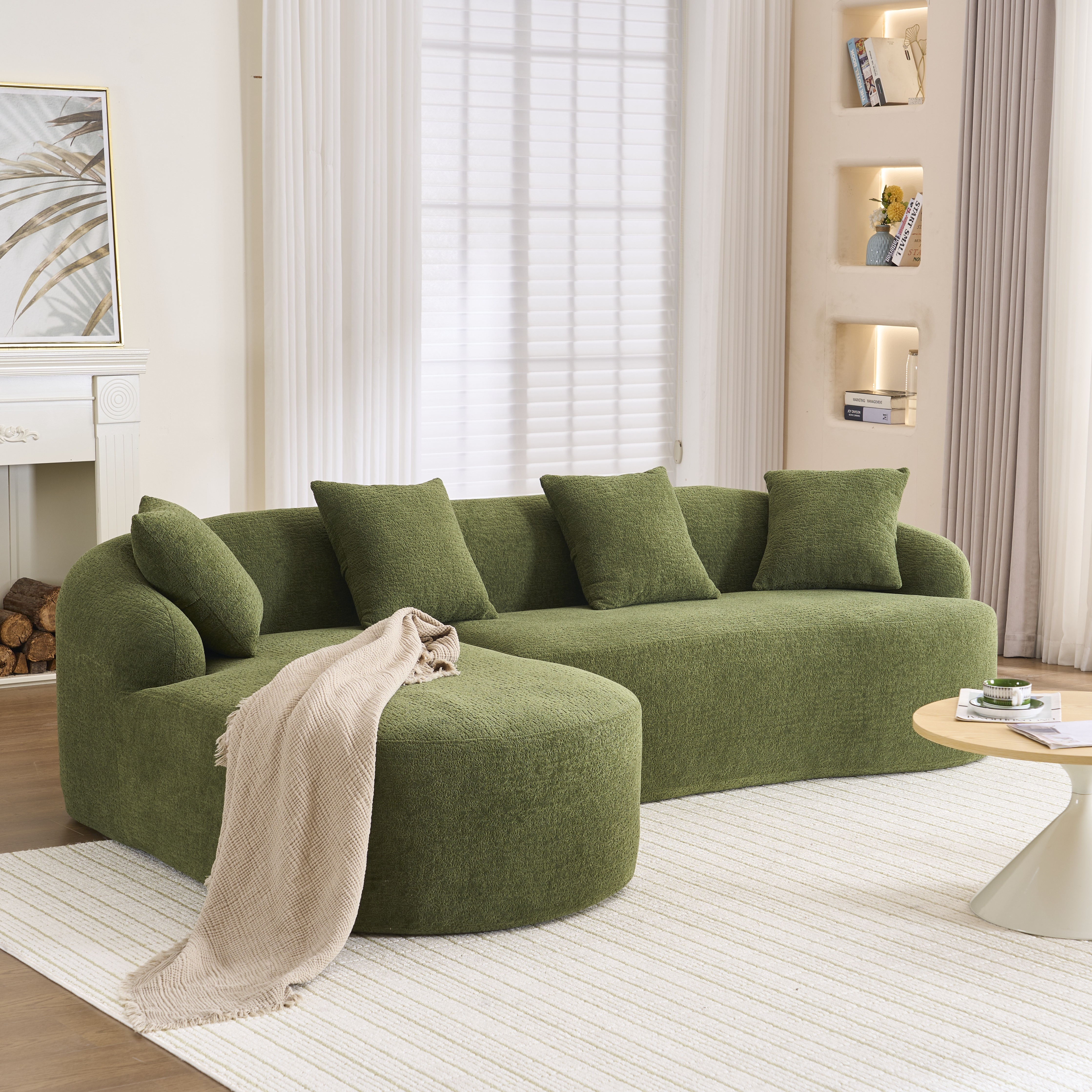
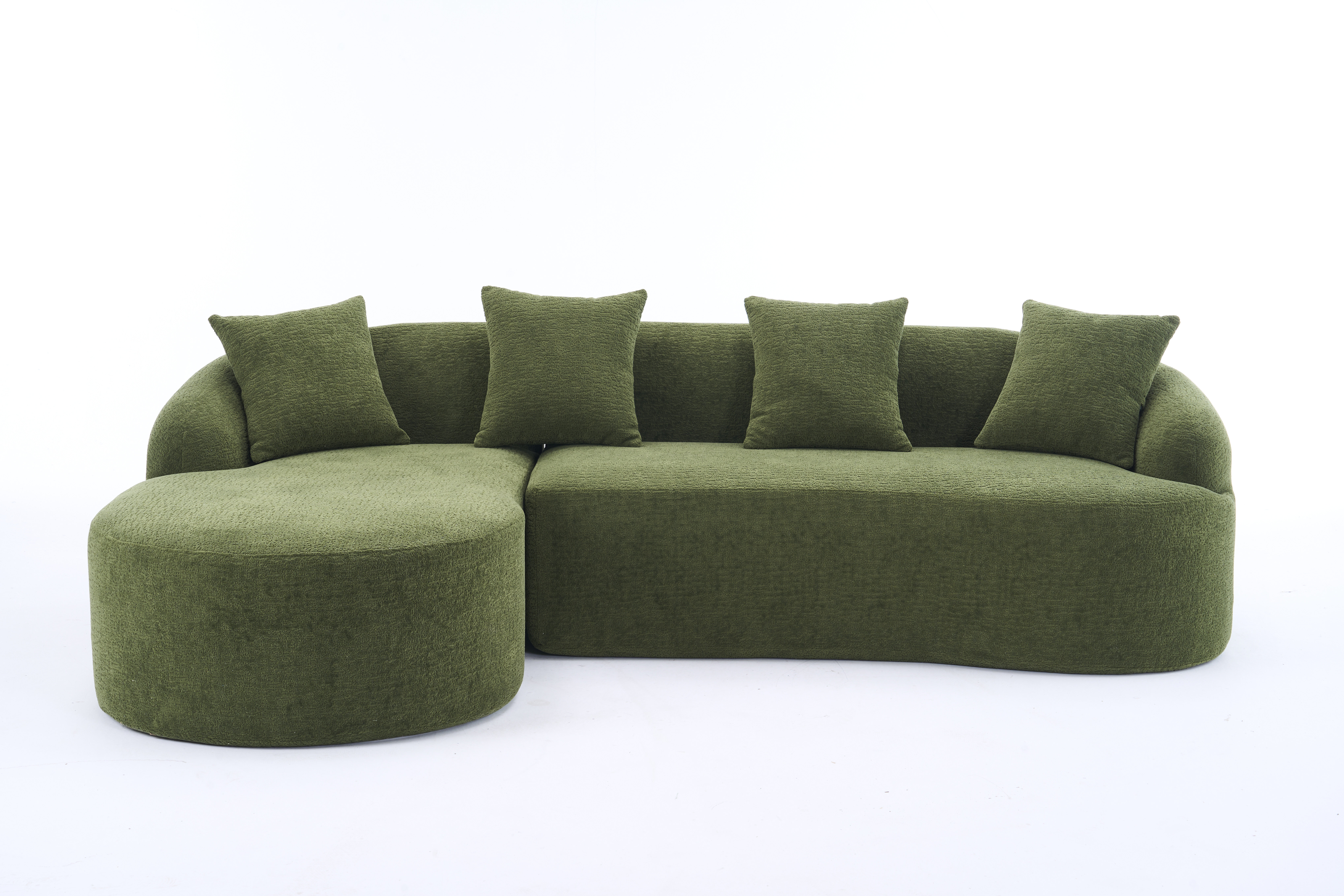
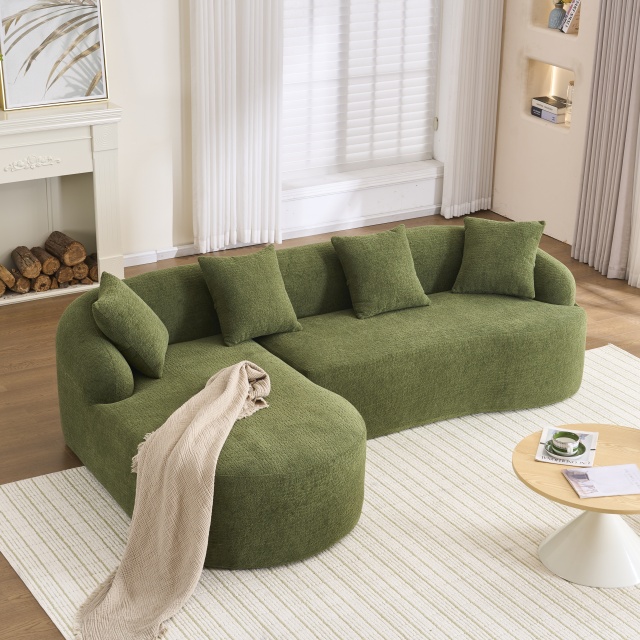
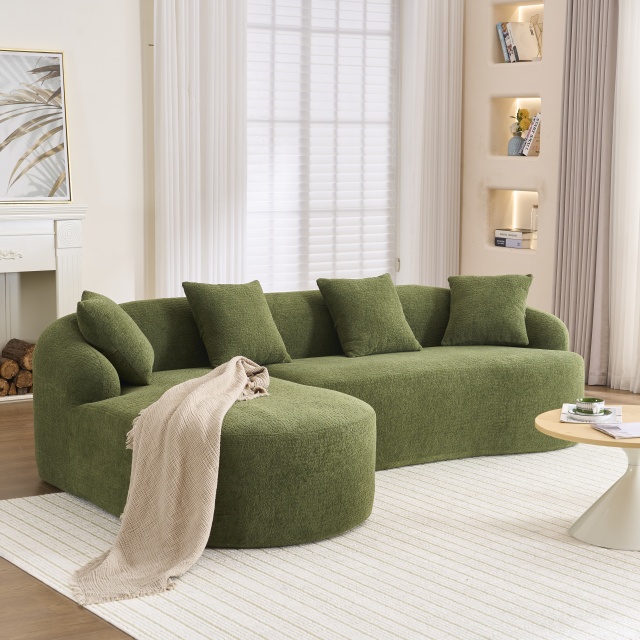
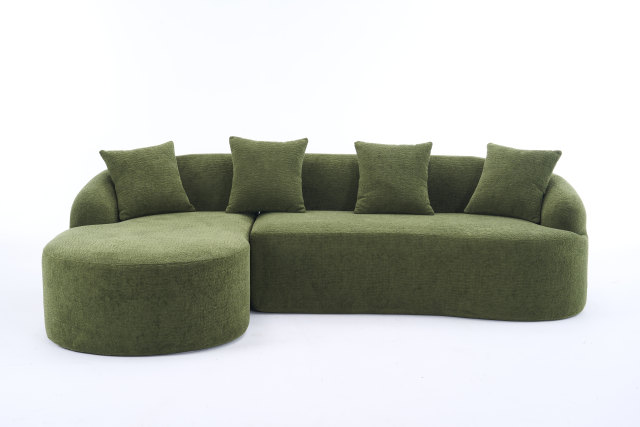
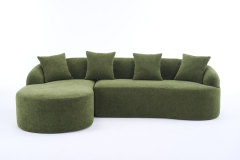
An L-shaped sectional sofa that curves at the chaise end instead of turning a hard right angle, this piece softens the corner of a room rather than squaring it off. The back is low and rolls over at the top, the arms round outward, and the whole form is upholstered as one continuous face — which is why the sofa looks pulled together from the doorway, not just from the front.
In daily use it splits into three natural places to sit. The long bench takes everyday sitting and the occasional extra guest. The curved end is deep enough to stretch out on with a book, a laptop or a film. The inside corner is where two people end up talking. It replaces the usual straight three-seater plus separate ottoman, without the ottoman drifting across the floor.
In a room that has to work in a smaller footprint, the curve earns its keep: a curved sofa keeps the open end of the room from feeling walled off, and the low back leaves the sightline to a window or a balcony door clear.
In a wholesale living room furniture range, or as the anchor of a custom sectional sofa brief, this is the piece you put at the front — the one that photographs well from every angle and sets the colour direction for everything around it.
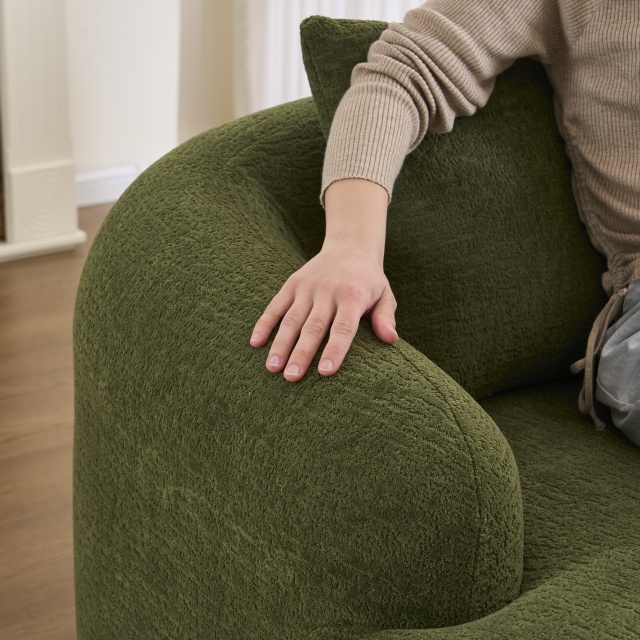
- A chaise that arcs, not squares: The long seat leaves the main body on a continuous curve rather than a 90-degree return, so the open end of the chaise sofa reads as an arc from across the room and the seat feels wider at the point where you sit down. - Low, rolled back: The back sits low and turns over at the top instead of standing upright, which keeps the sightline to a window clear and stops the piece from reading as a wall in a small room. - Rounded arms at both ends: The arms roll outward rather than standing square, giving you a padded ledge at either end and softening the corners people walk past. - One visible form: Back, arm and chaise are upholstered as a single face, so there is no exposed frame edge or hard break where the curve starts — the seams follow the shape instead of cutting across it. - Shape over ornament: No tufting, no nailheads, no contrast piping. The silhouette is the detail, which is what lets this curved sofa sit in pared-back interiors as easily as in layered ones. - Tonal throw pillows: The sofa is dressed with two throw pillows in the same green upholstery, so the ends of the L look finished rather than bare.
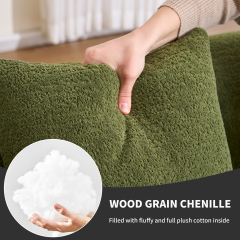
Wood-Grain Chenille Upholstery
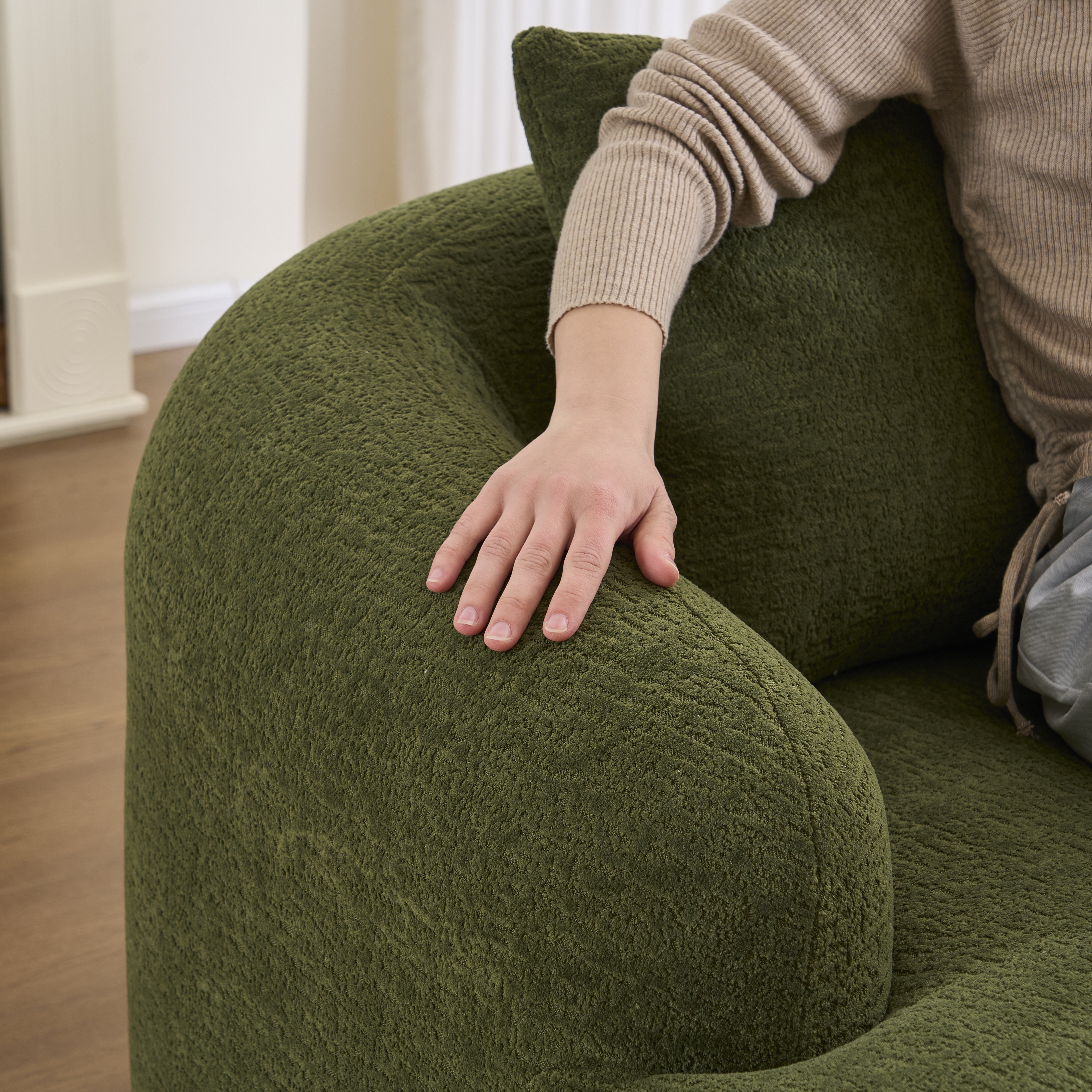
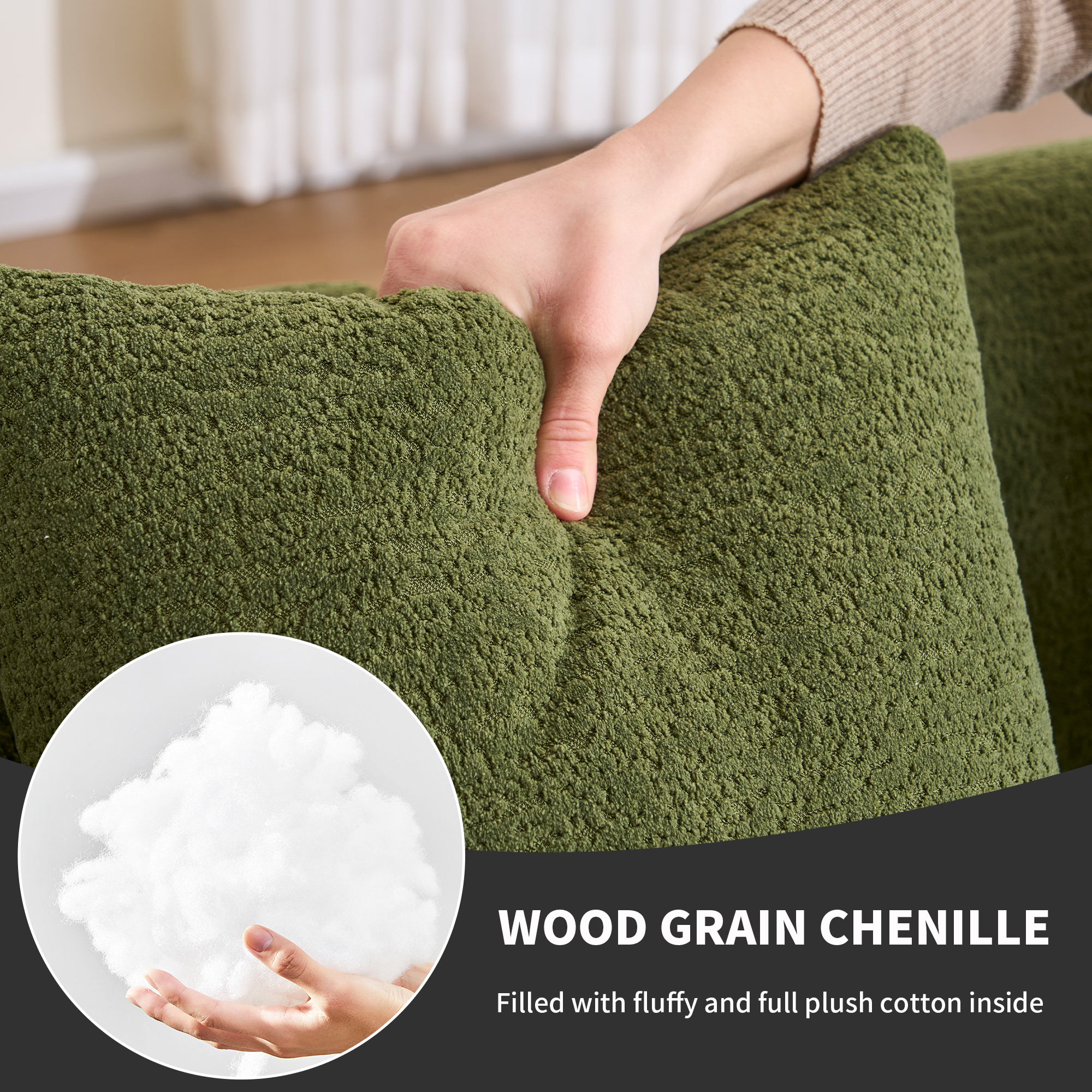
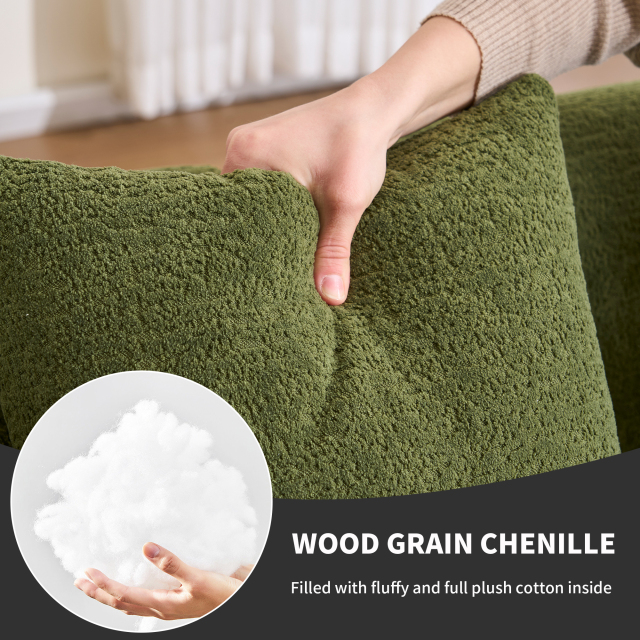
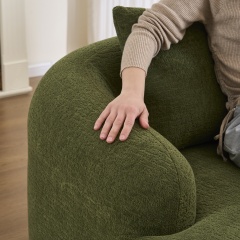
The cover is a chenille woven with a wood-grain pattern — fine irregular lines that run through the weave rather than sitting on top of it, so the texture travels across the back and around the chaise without a repeating print. Run a hand over it and the pile shows a faint direction in the light; brush it the other way and the tone evens out again.
In daylight the colour reads as a deep forest green with a slight olive cast. Under warm lamplight it moves toward moss, and against a cool grey wall it looks cooler again. That shift is normal for a green sofa of this depth — it is a pigment-and-pile effect, not a fault — so check the shade in your own room lighting before you commit rather than judging it from a screen.
Chenille is a pile fabric, and the pile is what makes it forgiving in a family room: everyday marks tend to sit in the fibres rather than on the surface, and a soft brush lifts most of them. It also carries the shape — a plush pile softens the curve of the chaise and the roll of the arms, where a flat weave in the same colour would show every seam used to build the bend.
The tone is what buyers describe as modern living room furniture done quietly: a strong colour handled in a matte, textured finish rather than a sheen. It sits well with warm woods, brushed brass and off-white plaster, and it holds its own against a pale wall without needing a patterned rug to carry the room.
Seat Comfort & Cushioning
The 30D figure describes the density of the foam: a denser grade holds its shape under weight instead of collapsing into the frame, which is the difference between a seat you can sit on all evening and one that leaves you feeling the base by the second hour. Full compression means the foam is pressed down for packing and then allowed to recover. When the sofa is first unwrapped it can look and feel a little flatter and firmer than expected — give the cushions a day or two in the room and they come back to full loft. The same thing happens, in miniature, every time someone gets up. The cotton wrap is what you feel first. It gives the surface a soft, slightly sink-in quality over the firmer core, so the sofa reads as plush without the hammock sag that all-soft filling produces after a few months. The chaise gets the same build, which matters: a chaise takes more concentrated weight on one spot than a bench seat does. Where the seat meets the back, the cushions are shaped to follow the curve rather than sitting as straight boxes on a curved frame. That keeps the seat line clean when the sofa is viewed from the side, and it stops the back cushions drifting apart at the corner. In a household where the sofa is the main seat in the room, expect the cushions to need a plump and a turn every few weeks. That is normal for a fibre-wrapped foam seat, and it is how the surface keeps an even tone.
Frame & Everyday Durability
Under the upholstery is a robust internal frame, built to carry the load the sofa is rated for and to hold the L-shape without flexing at the join. You will not see it, but you can feel it when two people sit down at once: the frame takes the weight and the seat returns to level rather than bowing toward the middle. The chenille is a hard-wearing pile. It resists the daily abrasion of jeans, cushions and vacuum heads, and small snags tend to stay small — a loop caught on a zip or a pet claw can be trimmed back rather than pulled, and the weave around it closes up again with a light rub. Watch the corners and the seat edges, which is where any upholstered piece shows age first. The arms on this curved sofa are rolled rather than square, so the highest-wear edge is a curve with no sharp corner to wear through, and the cushions sit over the frame rather than pressing against a hard rail.
Two-Piece Build & Layout
- Two cartons, one sofa: The piece travels as a main section and a chaise section. That is what keeps each package narrow enough to get through an apartment hallway, a lift or a tight stair turn.
- They may not arrive together: Split consignments happen. Set the first section in place, keep the second carton flat and dry, and finish the room when it lands rather than standing the carton on end.
- One fixed L, not a puzzle: The sections meet at the inside corner and are built to read as one continuous curve. This is a two-piece modular sofa in the packing sense — it is not designed to be reshuffled into different shapes week to week.
- Separable again for a move: The two sections come apart when you relocate. It is a two-person job, and the join needs re-aligning when they go back together.
- Tell us the hand you need: If the chaise has to fall on a particular side for your floor plan, say so before the order is released so the configuration can be confirmed with you.
- Leave access to the join: Keep the inside corner reachable for the first week so you can nudge the sections into line once both are unpacked and settled.
Room Fit & Measuring
- Measure the wall you have in mind and leave a hand's width at each end if the piece is going between two walls or between a wall and a doorway. If that run sits across a traffic route, check that the walkway still feels comfortable rather than tight. Check it against balcony doors, radiators and the path to a side table — a curved sofa of this depth needs that clearance more than a straight bench does.
- Plan for the curve: Most disappointments with modern living room furniture come down to fit rather than style, and a curve is hard to judge from a photograph. Lay the footprint out with tape before ordering, including the arc at the open end. Leave that margin if the sofa is going into an alcove or onto a made-to-measure rug.
- Colour has weight: A deep green sofa in a pale room reads as a solid block of colour, so give it a little air around it — a narrow gap to the wall will make the room feel smaller than it is.
- Measure the route, not just the room: Check the narrowest doorway, the lift and the stair turn on the way in. If you are close on any of them, ask us for the carton dimensions before the order is scheduled.
Where It Works
- Apartment living rooms: The footprint and the low back suit rooms where the sofa has to sit near a window or a balcony door without shutting out the light.
- Show flats and sales galleries: The curve photographs well and gives an unfurnished room a focal point before the artwork or the rug arrives.
- Guest lounges and serviced apartments: Confirm the specification with us first — commercial use puts different demands on upholstery than a home does.
- Commercial floors and window displays: Wholesale and e-commerce buyers building a wholesale living room furniture assortment get a statement piece that anchors a display and sets the colour story for the seating around it.
- Modern interiors that are layered rather than emptied: Where modern living room furniture means mixed materials — warm wood, plaster, brushed metal — the matte green and the soft curve sit inside that mix without demanding a matched set.
- Catalogue and content shoots: The sofa reads well from the side and from above, which matters when a listing needs more than one angle.
- Designers working to a scheme: Where a room has to land on a specific tone, this shape is something a custom brief can be built around rather than a colour you have to work around.
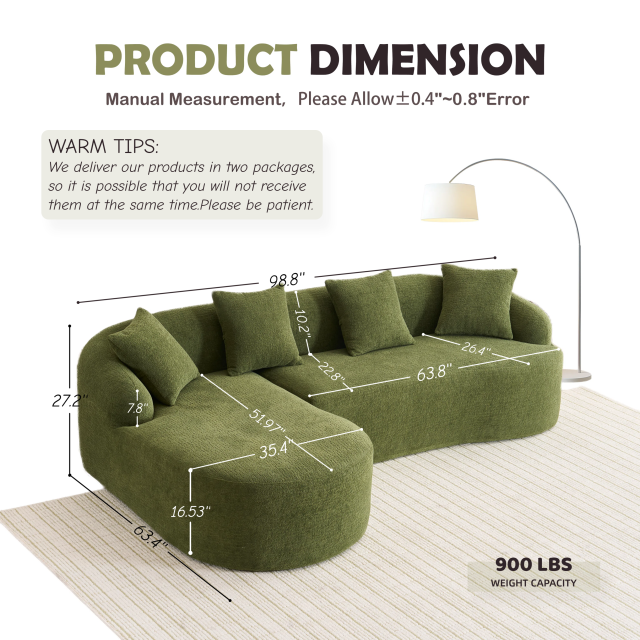
Dimensions & Capacity
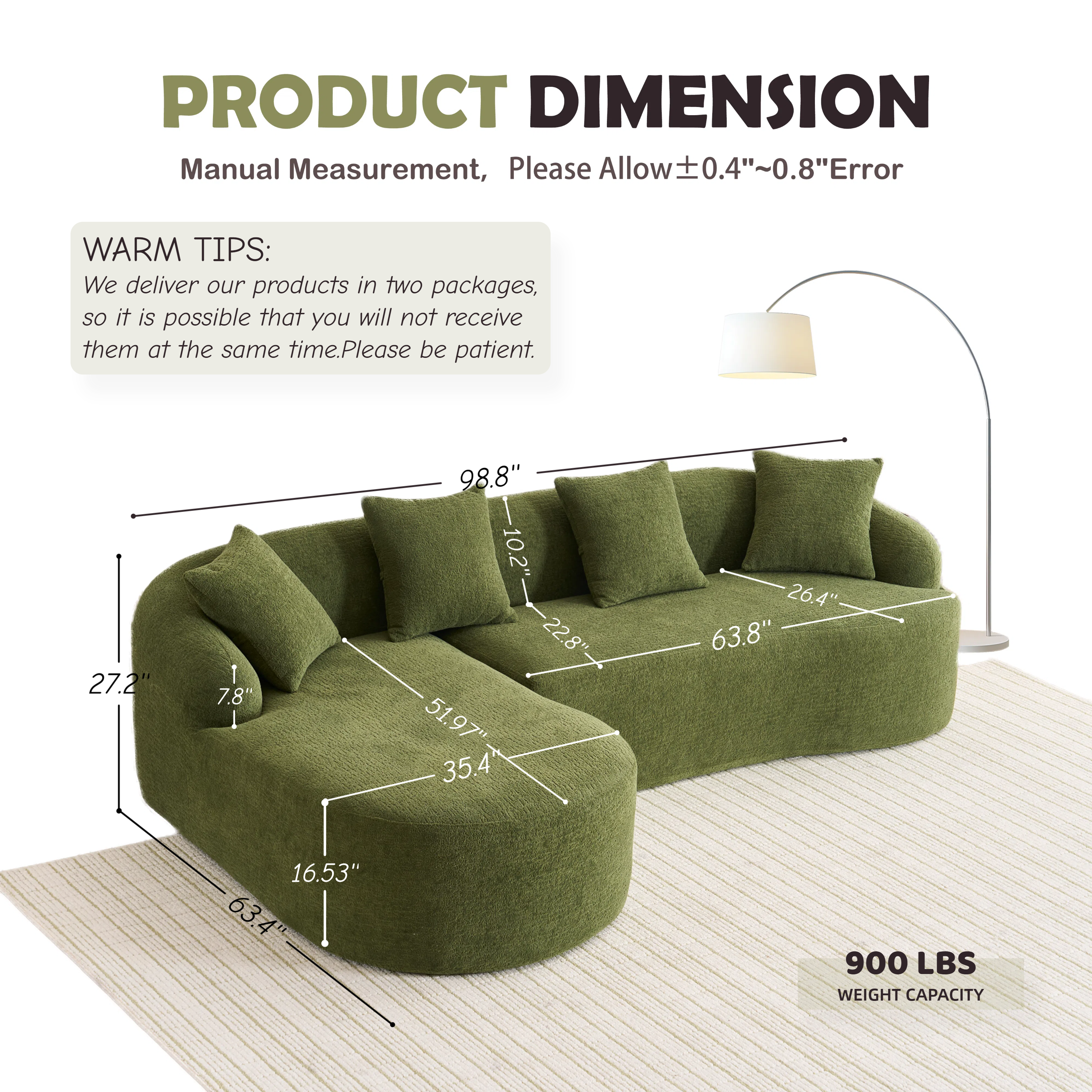
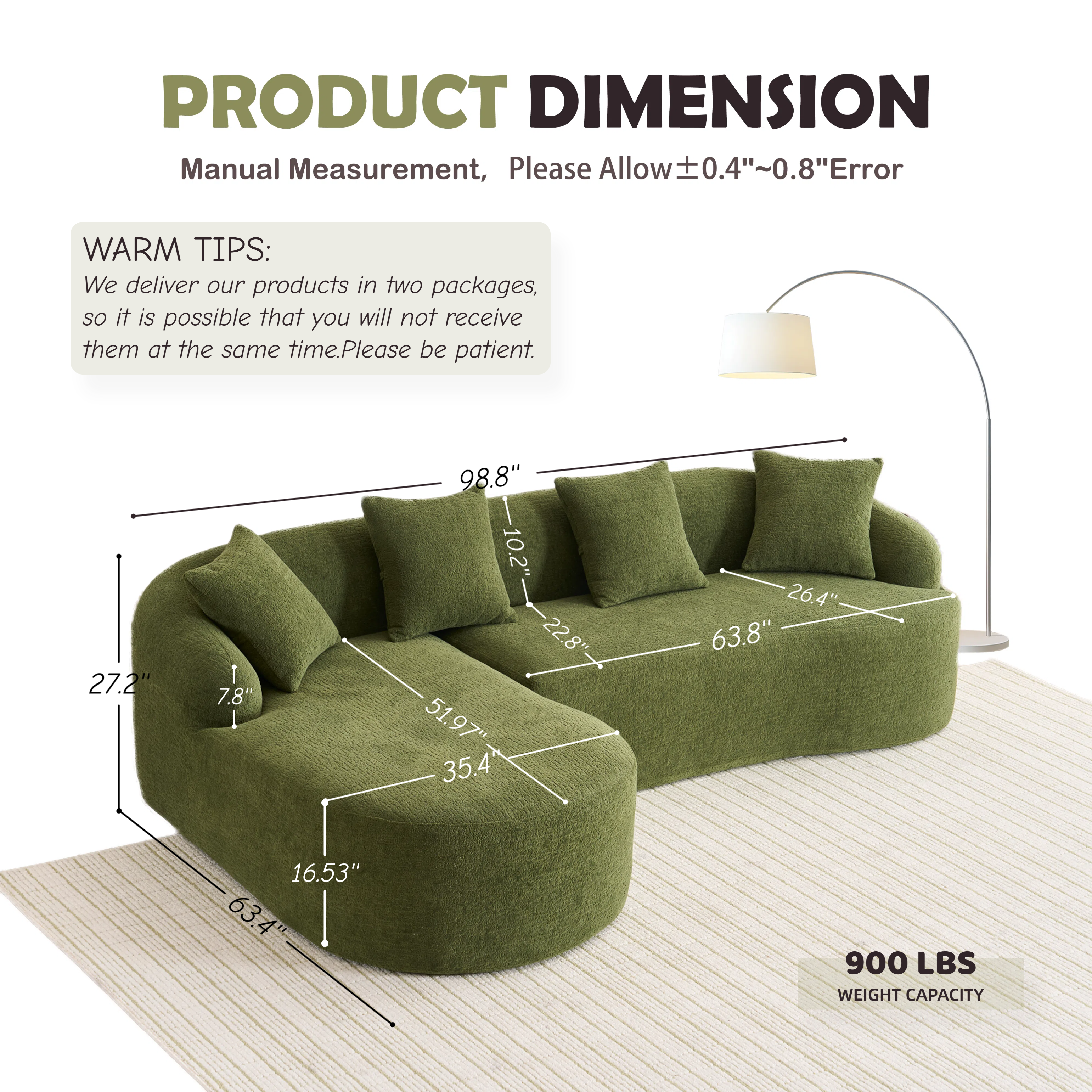
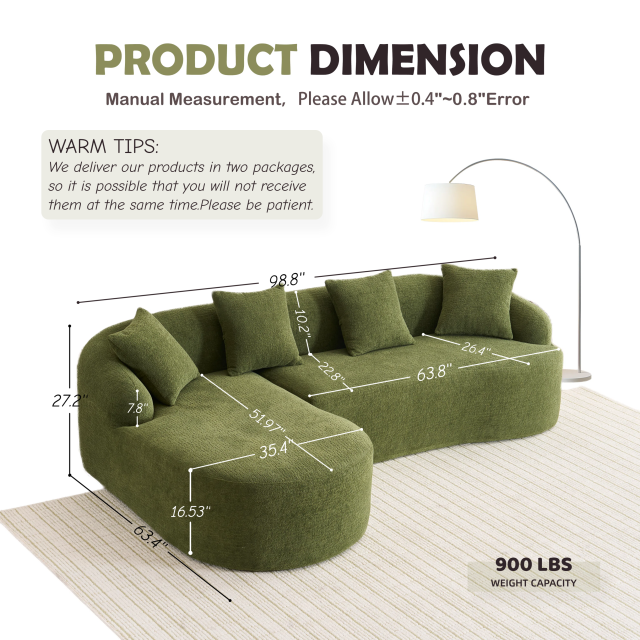
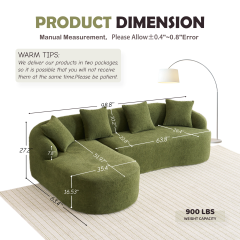
| Specification | Detail |
|---|
| Configuration | L-shape with curved chaise |
| Total length | 98.8 in |
| Main seating length | 63.8 in |
| Chaise length | 63.4 in |
| Seat height | 27.2 in |
| Armrest height | 7.8 in |
| Upholstery | Green wood-grain chenille |
| Seat core | Full-compression 30D high-density sponge with plush cotton wrap |
| Internal frame | Robust built frame |
| Load capacity | 900 lb |
| Measurement tolerance | ±0.4 in to ±0.8 in |
| Packaging | Two packages per unit |
| Assembly | No complex assembly required |
| Model | W2231S00031 |
Delivery & Assembly
- Confirm the delivery window with your sales contact and have someone on site to receive it — the cartons are large and need to be signed for.
- Clear the room and protect the floor before the cartons come in, and have them placed as close to the final position as the doorway allows.
- Cut the wrapping away from the fabric rather than toward it, and keep the blade shallow so nothing scores the upholstery underneath.
- Set the main section in place first, then bring the chaise in and line up the join at the inside corner.
- Let the sofa recover.
- Check the seams, the curve and the join in daylight before you sign off, and photograph anything that does not look right.
- Nothing needs building — there is no frame to bolt together. Flatten the cartons for recycling once both sections are in place.
Ordering & Export Support
- No-MOQ (Minimum Order Quantity) options: Standard items can be ordered as single pieces, so one sofa can go into a mixed shipment instead of committing to a full container of a single model.
- US-based warehousing and DDP (Delivered Duty Paid) capabilities: For North American buyers we can hold stock closer to your market and quote on delivered, duty-paid terms, which keeps replenishment short and puts the landed cost on one invoice.
- Fabric approval before production: Sign off the green against a physical swatch in your own lighting, and do the same for any custom colour, before the order is scheduled.
- Custom sectional sofa requests: Bring us a floor plan, a fabric reference or a sketch and we will price the piece against it. Configuration, upholstery and finish are confirmed in writing before production.
- Wholesale living room furniture orders: Sofas, lounge chairs, tables and storage can be combined in one consolidated shipment so a single container builds a complete room set.
- Freight and lead time: Because the modular sofa packs as two cartons rather than one crate, container loading is quoted per order — ask your sales contact for the current production lead time and shipping schedule for your destination.
- Listing assets: Dimensioned drawings and studio photography for this piece are available to support your listing, catalogue or project pack; request the current set from your sales contact.
Scale & Supply Capability
LinkStar Furniture is a factory-integrated furniture maker based in Foshan, China, producing since 2013 with a team of around 100 people. Because the factories are our own, production, quality and delivery schedules stay under our direct control rather than being passed between subcontractors. Our range runs to more than 500 items, backed by 3D models plus white-background and lifestyle imagery, with 30+ new pieces added every month. We take on OEM/ODM and custom development, including AI-assisted design work, and support overseas buyers through US warehousing and DDP delivery.
FAQ
Where should the chaise go in a small room?
The chaise is fixed to the main section, so it sets the orientation of the whole piece. Put the long seat where you want to stretch out, then let the open end of the chaise sofa face the way people walk into the room, so the curve reads as an invitation rather than an obstruction. In a narrow room, keep that open end away from the main walkway — it is the part of the footprint people brush past.
Will the green fade in a sunny room?
All upholstery shifts slowly where strong sun falls on it day after day, and a green sofa is no exception: the pile can look lighter where the light hits hardest. In a room with long afternoon sun, use a blind or sheer at peak hours and turn the throw pillows so the exposed faces wear evenly. Indirect daylight is far gentler and lifts the tone without bleaching it.
How do I clean a spill on the chenille?
Blot rather than rub, working from the outside of the spill inward with a clean white cloth so the mark does not spread. For anything beyond water, test a mild upholstery shampoo on a hidden area and let it dry before you touch the visible seat. Never scrub against the pile and never use bleach or solvent cleaners — both break down the fibre and leave a flat patch that catches the light differently from the rest of the sofa. Vacuum with a soft brush head rather than a hard nozzle.
How is this different from a free-configuration modular sofa?
A free-configuration modular sofa is built from repeatable seat units you can pull apart and rearrange whenever you like. This one is a fixed L: the back, arm and chaise are built as continuous forms, and the two sections exist so the piece can be packed, carried and delivered through an apartment building. If you need to change a room's layout from season to season, choose a modular system. If you want the curve to stay exactly as drawn, this is the piece for that.
Can I order it in a different fabric or size?
Yes — this is a piece we build to order, and custom sectional sofa requests are handled case by case with our team. Bring a fabric reference, a colour card or a floor plan and we will tell you what is practical for this shape. Anything that changes the specification is confirmed in writing, with the upholstery signed off on a physical sample, before production is scheduled.
How much support does the low back give?
The back is built low and rolled by design, so it supports you across the mid-back and lets you lean into the cushions rather than sitting upright against a high panel. That is part of why this sectional sofa keeps a small room feeling open. For long reading evenings, a bolster behind the small of the back changes the angle considerably, and the rolled arms give you a padded ledge at either end.