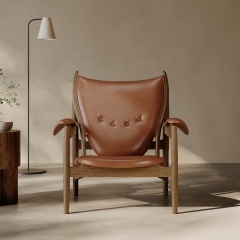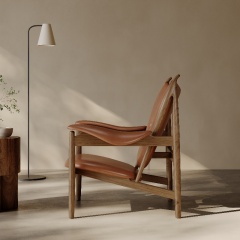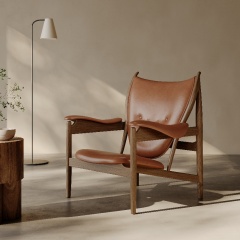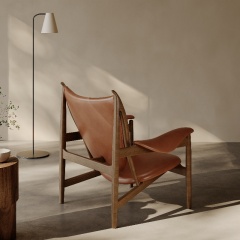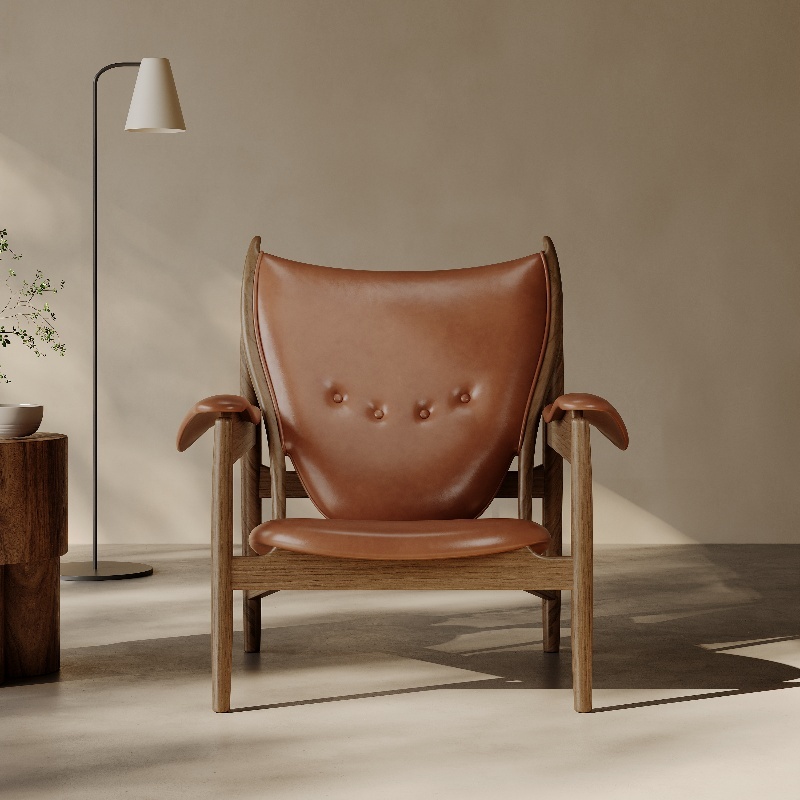
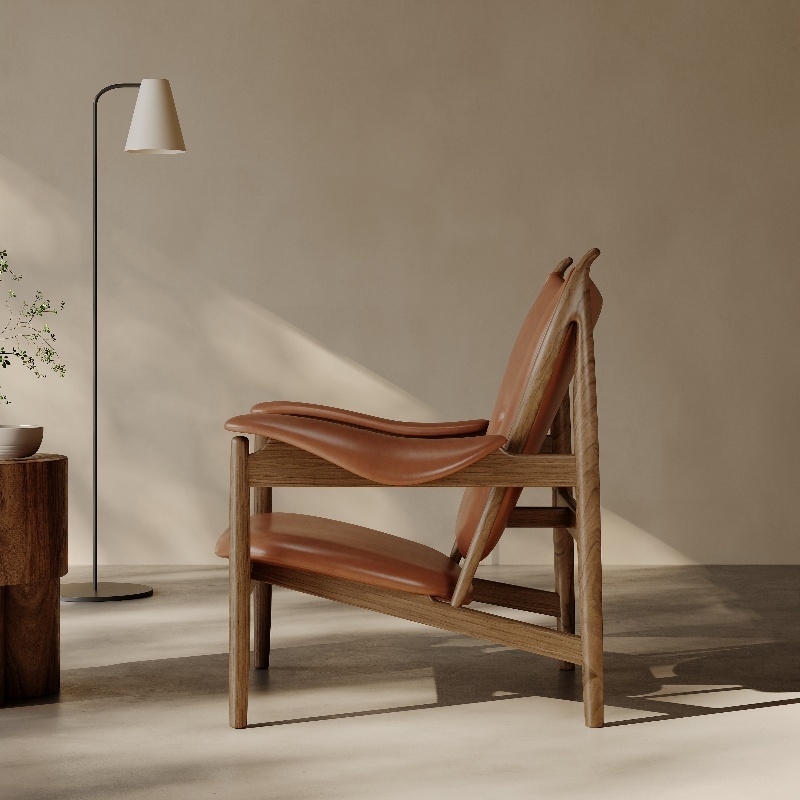
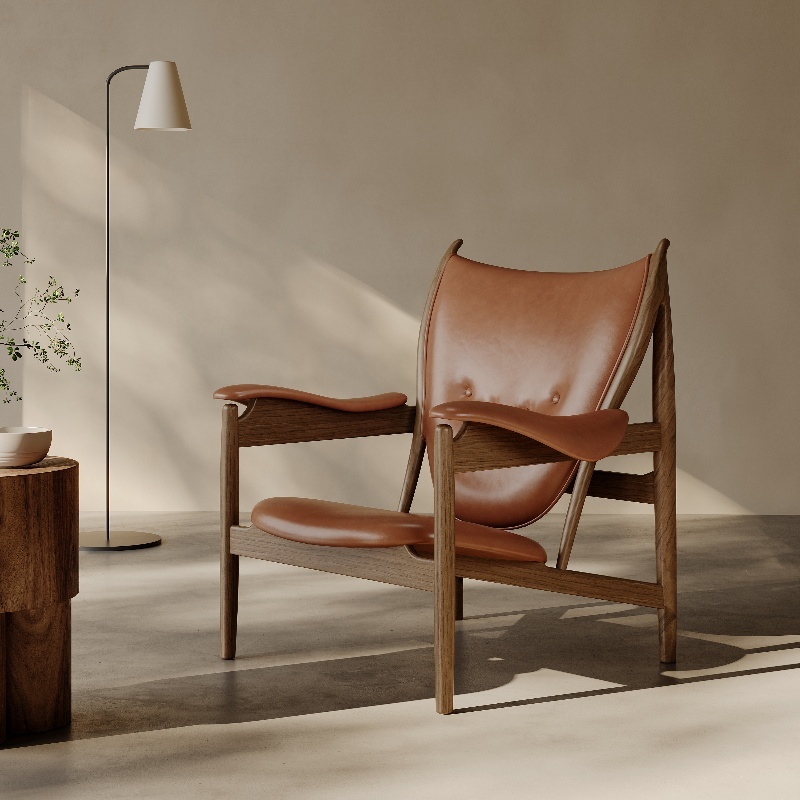
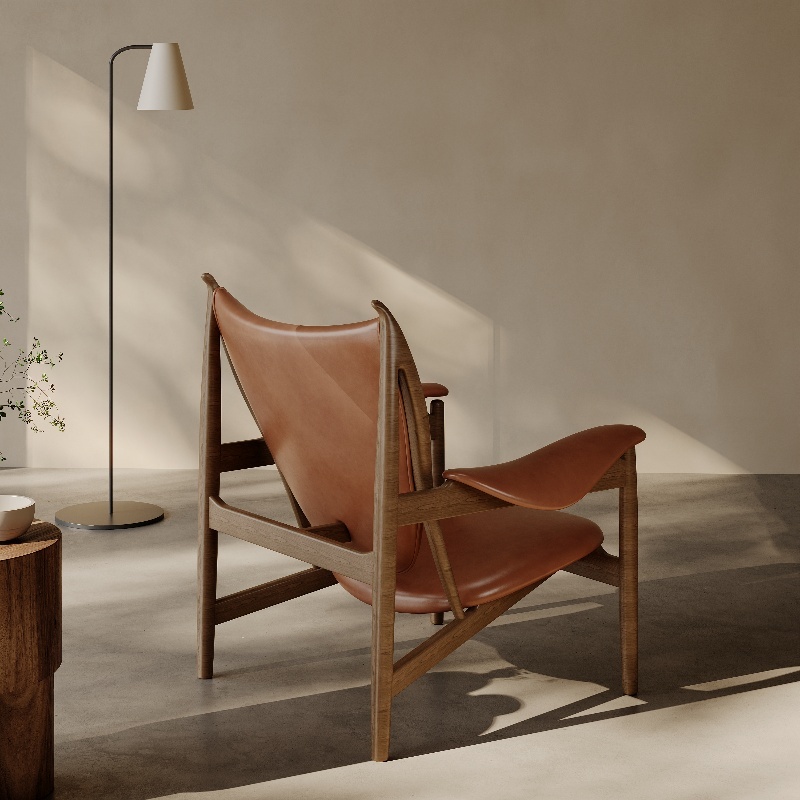
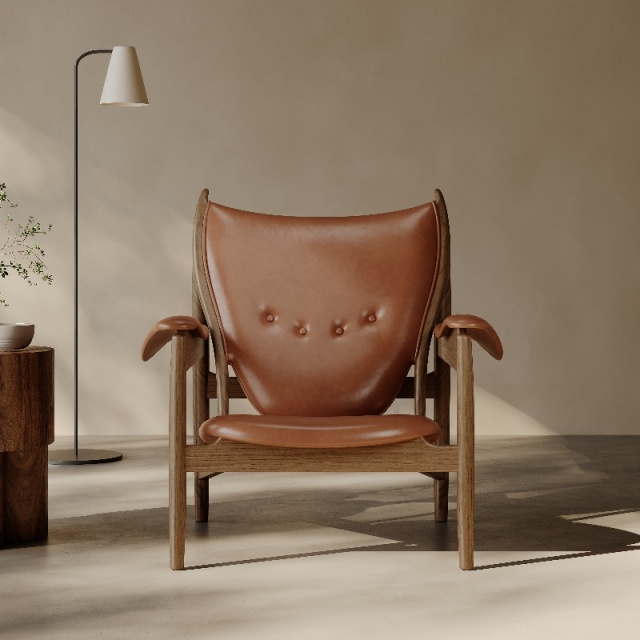
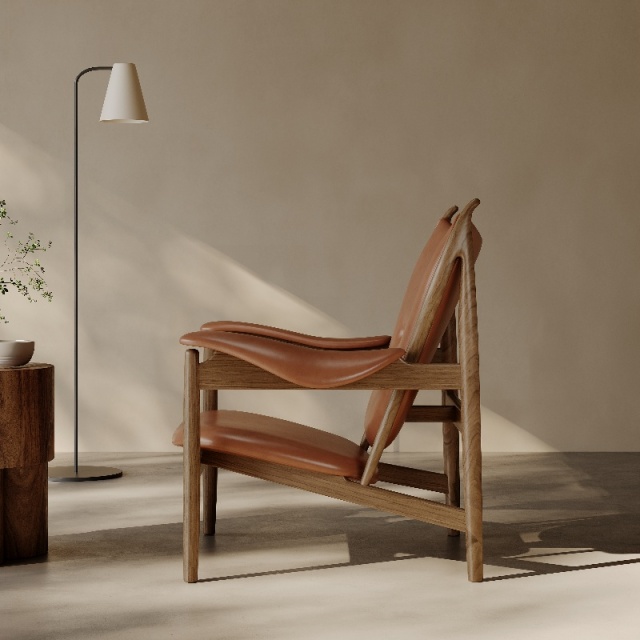
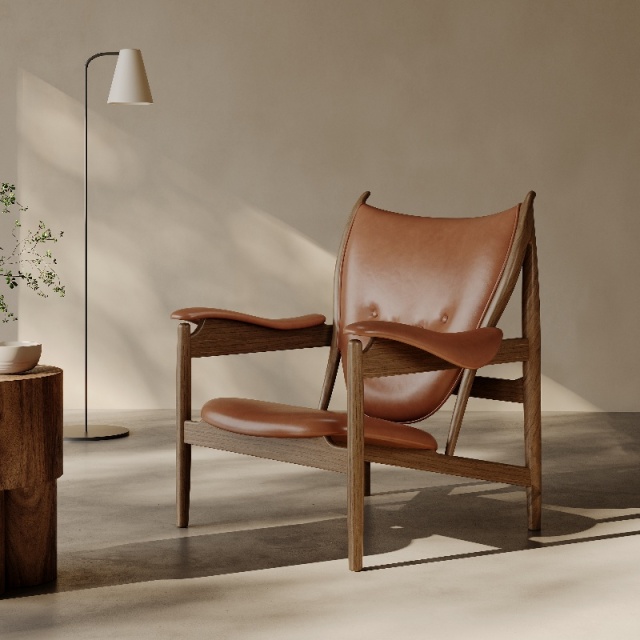
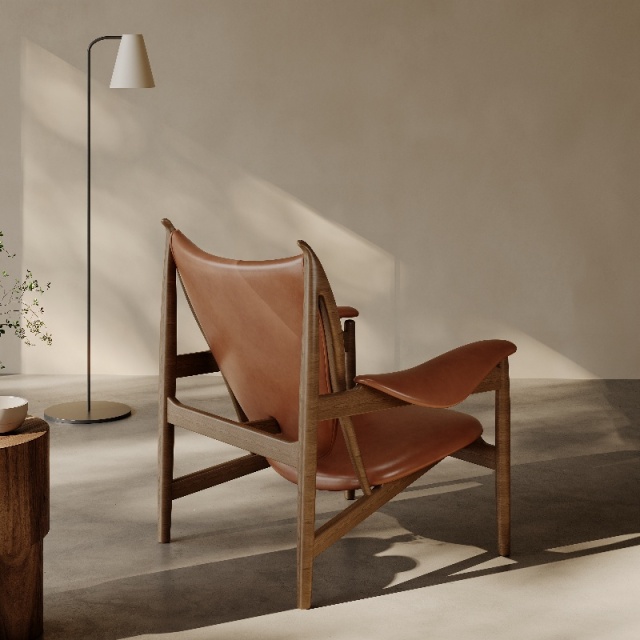
The frame stays visible at the arms, beneath the seat and down through the splayed legs, so the chair reads light rather than bulky, while the button-tufted back and curved leather arms give it a distinctly retro line. The upholstery is Italian oil-wax leather, tanned and dyed rather than sealed under a coating, so the grain you see is the hide itself. Together they produce a chair that is soft enough to settle into with a book for an hour and firm enough to rise from without pushing off the arms. It is one seat rather than a set, which is precisely why it works in rooms a sofa will not: at the end of a leather sofa, under a window, or on the sheltered side of a glazed balcony.
The design language is minimalist modern with a vintage accent: a low seat, a back that curves gently outward, and detailing drawn from mid-century pieces without reproducing any single named design. It is a shape that settles into a pared-back room as easily as a warmer, layered one, and the low back keeps this piece of modern leather furniture visually quiet in a small space.
The details hold the look together. Button tufting runs across the back, the arms curve forward and finish in line with the front legs, and the frame is left bare at the sides rather than upholstered over. The legs splay slightly outward, which widens the footprint a little and steadies the chair when someone leans back.
Proportion is deliberate. This is a single chair with a generous seat, so it can stand alone in a corner or pair across a small table; two of them make a conversation group without the visual mass of a sofa. In a designer living room furniture scheme it does the work of a statement piece while staying low enough to keep sightlines open.
Because the frame is solid wood and stays visible, the grain and the joints are part of the design instead of something hidden behind fabric — which is also what makes the construction easy for western leather furniture wholesale buyers to check before an order is confirmed.
Three materials carry this chair, and each one is doing a specific job. The hide is imported Italian oil-wax leather, tanned and dyed without a chemical coating. That leaves the grain open and the surface dry to the touch rather than slick. Oil-wax leather is a working material: it takes up oils from hands and light, it folds where the seat flexes, and it builds a depth of colour that a coated hide never reaches. Underneath sits a solid wood frame. The timber is exposed — arms, side rails and legs are all visible — so the frame is genuine structure rather than a hidden skeleton, and the arm is shaped to carry a hand as someone sits down or pushes up. Density is the number that decides whether a cushion still holds its height after a year of daily use, and 50D sits at the firm, resilient end of what is used in modern leather furniture. Because the leather seat is carried across the frame rather than boxed inside it, the foam, the hide and the timber each move a little independently. That is where the chair's give comes from, and it is why the surface can be re-specified without changing the shape. It also suits boutique hotel rooms and hospitality spaces that want a vintage accent, as well as covered balconies and semi-enclosed terraces. - Leather with nothing to hide. The oil-wax hide is tanned and dyed rather than coated, so there is no sprayed surface layer to wear through and no printed grain. What a western leather furniture wholesale buyer sees on the showroom floor is what the hide actually is. - An exposed solid wood frame. Rails, arms and legs are visible, so construction quality is something a buyer can put a hand on and inspect rather than take on trust. - An arm that doubles as a handrail. The arm is shaped for the hand, which matters more on a low lounge chair than on a dining chair: guests can lower themselves in and push back up without grabbing the frame. - A dry, matte surface. The leather has a soft, slightly grippy hand rather than a plastic sheen, which is unusual at this level of modern leather furniture and separates the chair immediately on a crowded showroom floor.
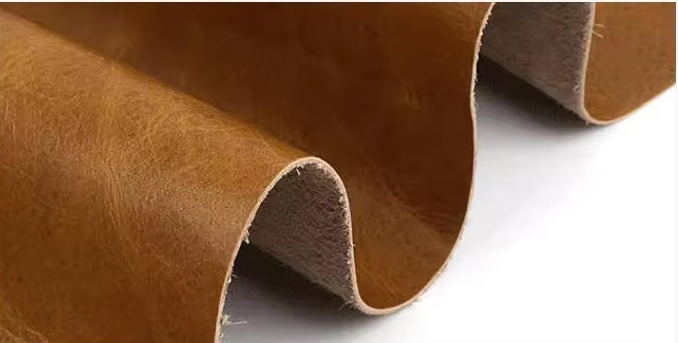
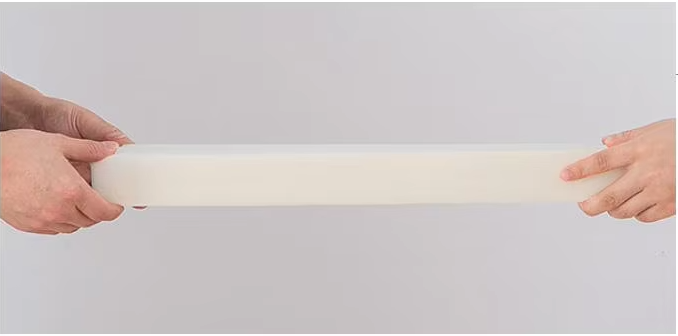
The seat is where a lounge chair either earns its place or gives itself away. Here the cushion sits over a leather seat suspended across the frame, so weight is spread rather than concentrated in the middle: the front edge stays up and the centre does not hollow out into a well. It compresses under a person and returns to shape when they stand, which is the property that keeps a chair looking new after two or three years of daily use — and it is the first thing to fail on lower-density cushioning. The leather is the other half of the equation. Oil-wax hides are dense and take abrasion well; where a coated surface can crack and lift once it has worn through, an oil-wax surface simply carries the marks. Chairs in this material tend to be replaced because the owner wants a change, not because the seat has failed. It is also easy to live with in a busy house or a serviced apartment, or to place in a designer home furniture project. The seat wipes clean, the frame dusts down, and there are no mechanisms, castors or reclining parts to service or repair. In a compact residential balcony it makes the most of the space without crowding it, and it can sit alongside other balcony furniture for a cohesive look.
Oil-wax leather does not stay still. It stretches slightly where the seat flexes, takes fine folds near the arms, and records scratches as lighter lines that darken as the oils settle back in. Over months it moves from an even tone to something deeper and more uneven — the patina that designer living room furniture in oil-wax leather is chosen for.
None of that is damage. It is the behaviour people choose oil-wax leather for, and the reason a well-used chair in this material can look better at five years old than it did in the showroom.
Day-to-day care is simple: dust with a dry or lightly damp cloth, blot spills instead of rubbing them in, and keep solvent and silicone-based cleaners away from the hide, because they strip the oils it needs.
On a covered balcony, keep the chair out of driving rain and long spells of direct midday sun. A sheltered position is fine; standing water and a full summer of unshaded exposure are not.
If the surface starts to look dry, a conditioner made for oil-wax leather will feed it back — apply thinly and buff off the excess. The wood needs no more than a wipe, and should never be left standing in water.
Owners moving across from coated modern leather furniture are often surprised by how much the surface changes in the first year. Give it that year before judging the final colour.
Covered positions, not open ones. This chair is meant for an indoor balcony, a glazed loggia, or a terrace with a roof over it. The reason is the material, not caution: Italian oil-wax leather over an exposed solid wood frame both take up and release moisture with the air around them. Rain landing on the hide dries into water rings, and water pooling around the feet of the legs is what dulls and lifts a wood finish over a season. Read the spot before the chair arrives. Stand where it will go and look up. If you can see open sky in the direction weather usually arrives from, the position is exposed. A roof, the floor of the balcony above, or the storey overhead gives the cover this chair needs. Depth matters as much as cover: a shallow overhang keeps off straight-down rain but not the slanted rain that comes with wind, so also note which way the prevailing wind hits the balcony — that is the direction water will actually reach the seat from. Sun and salt. Soft morning light is fine and even helps the leather take on colour. Long stretches of unshaded afternoon sun, especially through glass, dry the wax out of the hide faster than anything else and will leave the surface looking parched rather than patinated. On coastal balconies, salt settles out of the air onto the leather and the frame; a wipe with a dry cloth every couple of weeks keeps it from building up. The floor underneath. Balcony floors are laid to a fall so water can drain. If run-off gathers in the corner where you plan to put the chair, that corner is the wrong one — shift it to the high, dry side. Felt pads under the legs protect tile and stop the timber sitting directly in any film of water. Seasonal moves. Where a balcony is only used for part of the year, bring the chair inside rather than leave it through the wet or freezing months: nothing needs to be unscrewed or folded to move it, and a dry interior room resets both the leather and the wood. Checking in after weather. After a storm, blot any water on the seat instead of rubbing it, and let the chair dry in the air rather than against a radiator. If you are unsure whether a spot is sheltered enough, send us photographs of the balcony taken from inside and from outside, and tell us which direction it faces; we will tell you honestly whether the chair belongs there. For schemes that include genuinely open, unsheltered terrace furniture, we supply those pieces separately as a patio furniture manufacturer, and this chair is specified for the covered side of the same plan.
Boutique hotels, serviced apartments and villa projects use this chair where a room needs one strong seat rather than a leather sofa and armchairs: the corner of a suite, the sheltered side of a balcony, the space between a bed and a window. Hospitality buyers tend to care about two things beyond appearance — how the piece holds up under guests, and whether the next phase can match it. The fact that the leather and the frame finish are chosen at order stage is what lets a second phase match the first. Staging companies like the chair because it is a single piece that photographs well and moves between properties without a modular system to re-plan for every room. Trade and contract buyers take it as part of a wider leather seating programme.
| Property | Value |
|---|---|
| Product type | Single lounge sofa chair |
| Upholstery | Imported Italian oil-wax leather |
| Frame | Solid wood, exposed |
| Cushion | Swiss Hilding 50D high-resilience foam |
| Foam density | 50 kg/m³ |
| Arms | Yes — leather-covered, shaped as a handrail |
| Back | Button-tufted |
| Style | Minimalist modern with vintage detailing |
| Assembly | Delivered pre-assembled |
| Foldable | No |
| Customization | Materials and finishes available |
| Typical settings | Living room, covered balcony, hotel suite |
| Origin | Mainland China |
LinkStar Furniture is a factory-integrated furniture maker based in Foshan, China, producing since 2013 with a team of around 100 people. Because the factories are our own, production, quality and delivery schedules stay under our direct control rather than being passed between subcontractors. Our range runs to more than 500 items, backed by 3D models plus white-background and lifestyle imagery, with 30+ new pieces added every month. We take on OEM/ODM and custom development, including AI-assisted design work, and support overseas buyers through US warehousing and DDP delivery.